
Which Conveyor Positioning Solution Is Right for Your Application?
In material handling and conveyor automation, product control is critical. Manufacturing facilities, warehouse systems, cargo handling operations, and assembly lines all rely on positioning devices to stop, hold, stabilize, or locate products during movement.
Two products often associated with conveyor positioning applications are the Omtec PPD-1 Pop-Up Pad and the B&T Bearing Cargo Pop-Up Stop. While these products may appear similar at first glance because both “pop up” from a conveyor surface, they actually serve very different purposes.
Understanding the differences between these systems can help engineers, maintenance managers, integrators, and operations teams choose the right solution for their application.
In this guide, we compare:
- Omtec PPD-1 pneumatic positioning pads
- B&T Bearing cargo pop-up stops
- Conveyor stopping methods
- Ball transfer positioning systems
- Pneumatic vs. mechanical product control
- Conveyor integration considerations
- Ideal applications for each system
What Is the Omtec PPD-1 Pop-Up Pad?
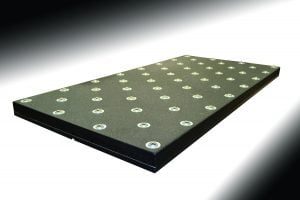
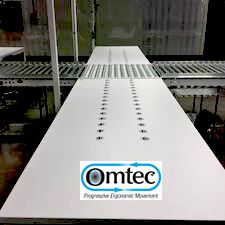
The Omtec PPD-1 is a pneumatic positioning pad designed for conveyor workstations and ergonomic product handling systems.
The device uses compressed air to raise a friction pad above the conveyor surface. Once raised, the pad stabilizes or positions a product during assembly, inspection, packaging, or transfer operations.
The PPD-1 is commonly used alongside:
- Omtec pneumatic ball transfer strips
- Ball transfer tables
- Ergonomic assembly stations
- Product rotation systems
- Manufacturing work cells
The primary purpose of the PPD-1 is not to stop a product aggressively. Instead, it is designed to:
- hold products in place
- stabilize loads
- improve ergonomics
- assist operators during assembly tasks
- temporarily isolate products from conveyor motion
The system is often integrated into larger conveyor automation solutions.
What Are B&T Bearing Cargo Pop-Up Stops?
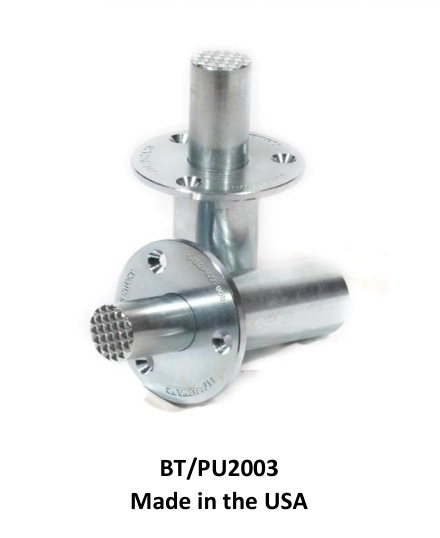
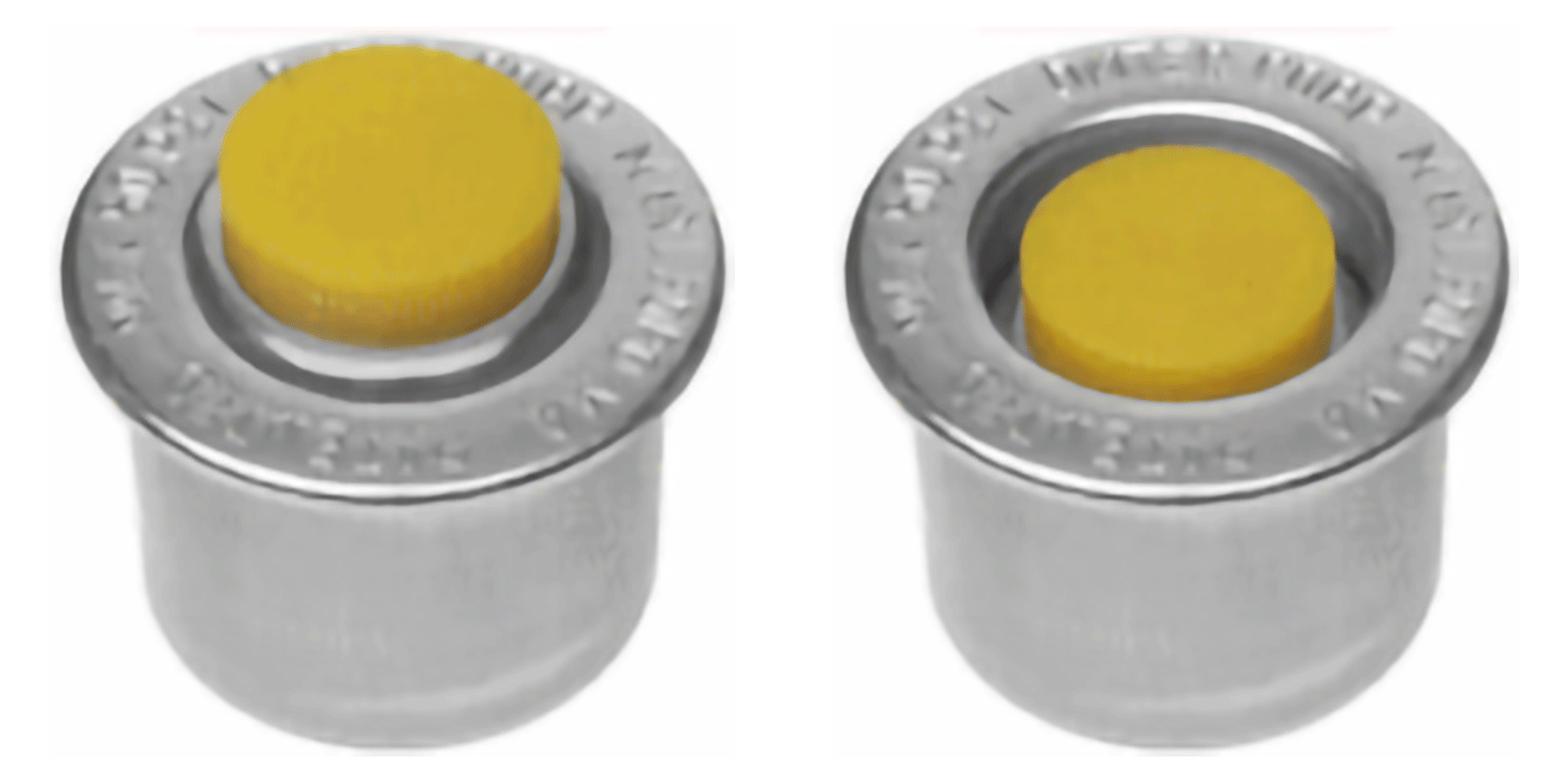
B&T Bearing Cargo Pop-Up Stops are mechanical stop devices designed to physically stop or locate cargo on conveyor systems and ball transfer tables.
Unlike the Omtec PPD-1, these units do not rely on compressed air. Instead, they use a spring-loaded mechanical stop mechanism.
When raised, the stop protrudes above the conveyor surface and prevents cargo from moving further.
These systems are commonly used in:
- Cargo handling systems
- Ball deck systems
- Airport freight conveyors
- Heavy-duty transfer stations
- Pallet positioning systems
- Container handling applications
- Conveyor stop zones
The primary purpose of a cargo pop-up stop is to:
- stop movement
- hold position
- prevent rolling
- locate containers
- create accumulation zones
- improve conveyor control
Unlike the PPD-1, which focuses on ergonomic product stabilization, the B&T stop is designed for physical cargo restraint.
Key Differences Between Omtec PPD-1 and B&T Cargo Pop-Up Stops
1. Pneumatic vs. Mechanical Operation
One of the biggest differences is how the systems operate.
Omtec PPD-1
- Pneumatic
- Requires compressed air
- Raises friction pad using air pressure
- Integrated with pneumatic controls
B&T Cargo Stop
- Mechanical
- Spring-loaded
- No compressed air required
- Simpler installation
Facilities without compressed air access may prefer mechanical cargo stops because they reduce installation complexity.
However, facilities already using pneumatic conveyor systems may benefit from the integration flexibility of the Omtec solution.
2. Product Stabilization vs. Product Stopping
The Omtec PPD-1 is designed primarily for stabilization.
The B&T stop is designed primarily for stopping.
This difference is extremely important.
Omtec PPD-1 Use Cases
- Product assembly
- Operator positioning
- Workstation stabilization
- Product rotation
- Ergonomic lifting assistance
The PPD-1 helps operators manipulate products while minimizing strain.
B&T Cargo Stop Use Cases
- Conveyor stop zones
- Cargo positioning
- Pallet stops
- Ball deck stopping
- Freight restraint
- Accumulation zones
The B&T stop physically prevents movement.
3. Conveyor Integration
Both systems can integrate into conveyor systems, but they work differently.
Omtec PPD-1 Integration
The PPD-1 typically integrates into:
- Pneumatic ball transfer strips
- Ergonomic conveyor stations
- Automated work cells
- Precision assembly lines
These systems are often custom-engineered.
The PPD-1 works especially well when combined with:
- Pop-up ball transfers
- Product rotation stations
- Lift-and-position applications
B&T Cargo Stop Integration
B&T cargo stops are more universal.
They can integrate into:
- Ball transfer tables
- Ball decks
- Conveyor stop zones
- Pallet handling systems
- Cargo transfer stations
- Freight conveyor systems
They are often easier to retrofit into existing conveyor systems.
4. Maintenance Requirements
Maintenance requirements differ significantly between pneumatic and mechanical systems.
Omtec PPD-1 Maintenance
- Air line inspection
- Pneumatic fittings
- Regulators
- Air leaks
- Cylinder wear
- Valve maintenance
Pneumatic systems offer flexibility but add complexity.
B&T Cargo Stop Maintenance
- Spring inspection
- Mechanical wear checks
- Occasional lubrication
Mechanical systems are typically simpler to maintain.
Facilities seeking low-maintenance solutions may prefer mechanical cargo stops.
5. Installation Complexity
The Omtec PPD-1 typically requires:
- Compressed air routing
- Pneumatic controls
- Regulators
- Air fittings
- System integration
Installation may require engineering support.
The B&T stop generally requires:
- Mounting hardware
- Surface integration
- Mechanical positioning
This makes the B&T solution easier for many facilities to install.
Applications for Omtec PPD-1 Systems
The Omtec PPD-1 excels in manufacturing environments where operator ergonomics and product manipulation are priorities.
Common industries include:
- Automotive manufacturing
- Appliance assembly
- Aerospace assembly
- Electronics manufacturing
- Industrial assembly stations
Typical applications include:
- Rotating products during assembly
- Stabilizing products for inspection
- Holding products during packaging
- Ergonomic operator workstations
The PPD-1 is ideal when products need controlled positioning rather than hard stopping.
Applications for B&T Cargo Pop-Up Stops
B&T cargo stops excel in heavy-duty material handling systems.
Common industries include:
- Air cargo handling
- Distribution centers
- Warehouse systems
- Freight terminals
- Heavy conveyor systems
- Ball transfer handling stations
Typical applications include:
- Pallet stops
- Container locating
- Conveyor accumulation
- Cargo restraint
- Heavy product stopping
- Ball deck positioning
These systems are ideal when positive stopping force is required.
Can B&T Cargo Stops Be Used in Conveyor Systems?
Yes.
B&T cargo pop-up stops are commonly used in conveyor applications.
However, they are typically used in:
- Ball transfer systems
- Ball decks
- Cargo handling conveyors
- Pallet transfer systems
They are less common in:
- High-speed carton conveyors
- Small package conveyor systems
Their design is better suited for:
- Heavy loads
- Pallets
- Containers
- Freight movement
Which System Is Better for Ball Transfer Tables?
This depends on the application.
Choose Omtec PPD-1 If:
- Operators need ergonomic positioning
- Products require rotation
- Pneumatic systems already exist
- Assembly tasks are involved
- Product stabilization is needed
Choose B&T Cargo Stops If:
- Products need hard stopping
- Cargo restraint is required
- Mechanical simplicity is preferred
- Heavy loads are involved
- Conveyor accumulation zones are needed
In some applications, both systems could even be used together.
One interesting aspect of conveyor cargo stops is that they remain a relatively underserved industrial niche online.
Many manufacturers:
- have outdated websites
- lack educational content
- do not optimize product pages
- rely heavily on PDFs
This creates opportunities for industrial suppliers and distributors to rank in Google for:
- conveyor pop-up stop
- cargo conveyor stop
- ball deck stop
- pallet conveyor stop
- spring-loaded conveyor stop
- pop-up conveyor stop
- conveyor positioning stop
Long-tail industrial SEO often requires:
- technical content
- exact-match keywords
- application examples
- clear specifications
This is especially true for niche conveyor products.
Alternatives to Omtec PPD-1 Systems
Some facilities seek alternatives to Omtec systems due to:
- pneumatic complexity
- engineering costs
- maintenance requirements
- installation costs
Possible alternatives include:
- Mechanical conveyor stops
- Ball transfer locator systems
- Cargo pop-up stops
- Pneumatic stop cylinders
- Manual positioning stations
B&T cargo pop-up stops may serve as a practical alternative in applications where simple stopping is sufficient.
However, they are not direct replacements for ergonomic pneumatic positioning systems.
Choosing the Right Conveyor Positioning Solution
Before selecting a conveyor positioning system, consider:
Load Type
- Pallets
- Containers
- Assemblies
- Cartons
- Freight
Conveyor Type
- Ball transfer table
- Roller conveyor
- Ball deck
- Chain conveyor
- Transfer station
Required Function
- Stabilization
- Hard stopping
- Positioning
- Ergonomic support
- Accumulation
Facility Infrastructure
- Compressed air availability
- Maintenance capabilities
- Integration requirements
Budget
Mechanical systems are often less expensive and easier to maintain.
Pneumatic systems offer more control and flexibility.
Final Thoughts
Although the Omtec PPD-1 and B&T Bearing Cargo Pop-Up Stops may seem similar, they solve different material handling problems.
The Omtec PPD-1 is best suited for:
- ergonomic manufacturing
- product stabilization
- pneumatic positioning systems
- operator-assisted assembly
The B&T cargo stop is best suited for:
- cargo restraint
- conveyor stop zones
- ball deck positioning
- pallet handling
- heavy-duty stopping applications
Both products play valuable roles in conveyor and material handling systems.
Choosing the correct solution depends on:
- application requirements
- load characteristics
- facility infrastructure
- desired level of automation
For facilities seeking simple, rugged conveyor stopping systems, cargo pop-up stops may offer a cost-effective solution.
For facilities requiring ergonomic product positioning and controlled manipulation, pneumatic positioning pads remain an excellent option.